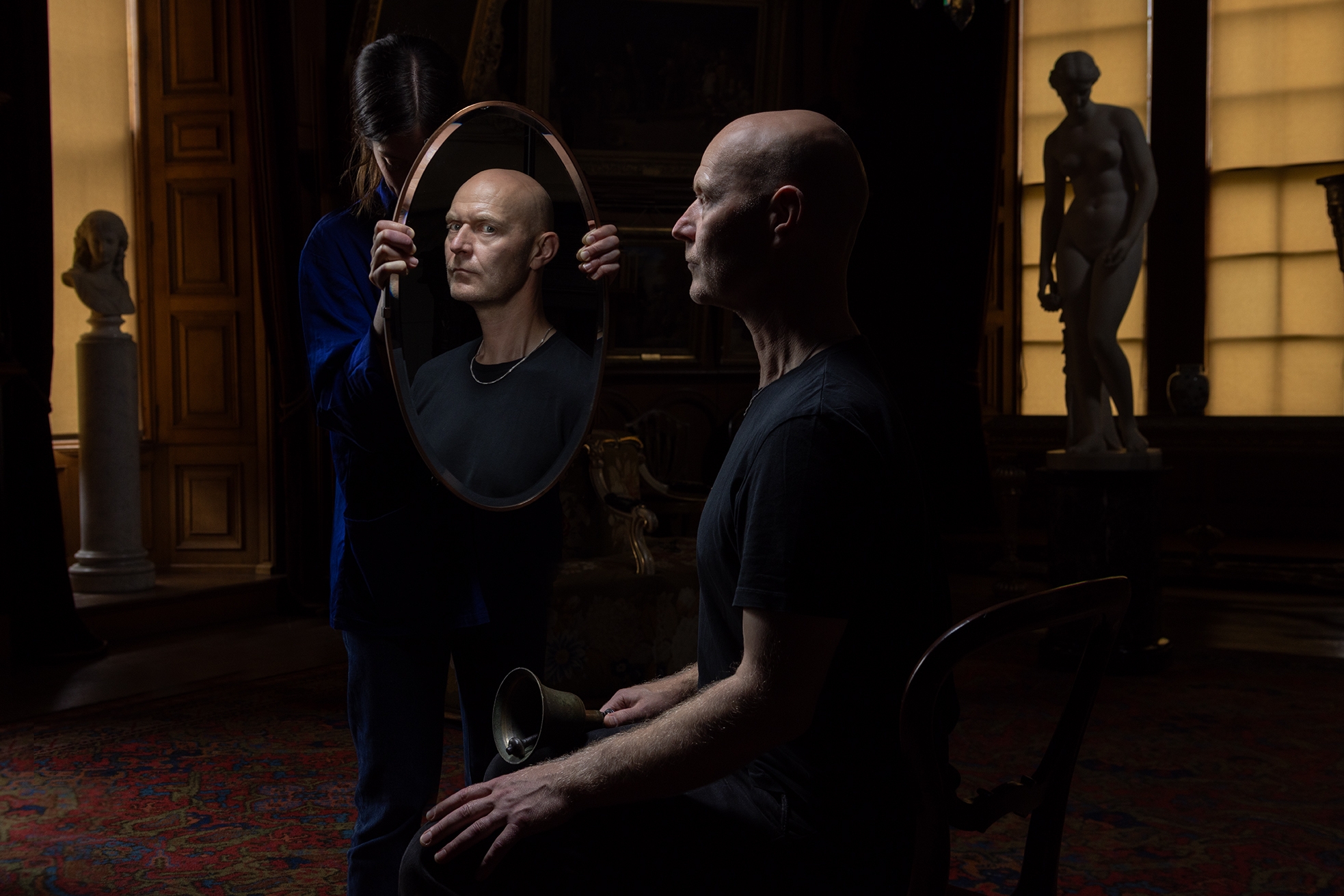
Phonograms
28.10.2026 - 28.02.2027
A new series of sound commissions that invites artists, musicians, art historians and writers each year to interpret the Cerruti Collection through audio journeys.
With Phonograms, the Cerruti Foundation places the Collection in the hands of the imagination of those who tell its stories and those who listen. Artists, musicians, art historians and writers reinvent the traditional audio guide through commissioned sound works that weave together guided tours, sonic essays and field recordings.
Each contributor charts their own path: following an artwork, pursuing an association, or bringing sounds and stories from elsewhere into the rooms of the Villa. Available to listen to both at the Collection and online, Phonograms uses sound as a way of seeing things differently.
The first edition brings together Beatrice Bonino X Any, Jeremy Deller, Giorgio Di Domenico and Siôn Parkinson.
On Friday 30 October, the Cerruti Foundation joins forces with Cripta747, an independent cultural centre founded in Turin in 2008, to present The Phonograms Variety Show, an evening of music, performances, readings and sound interventions featuring the creators of the four Phonograms.
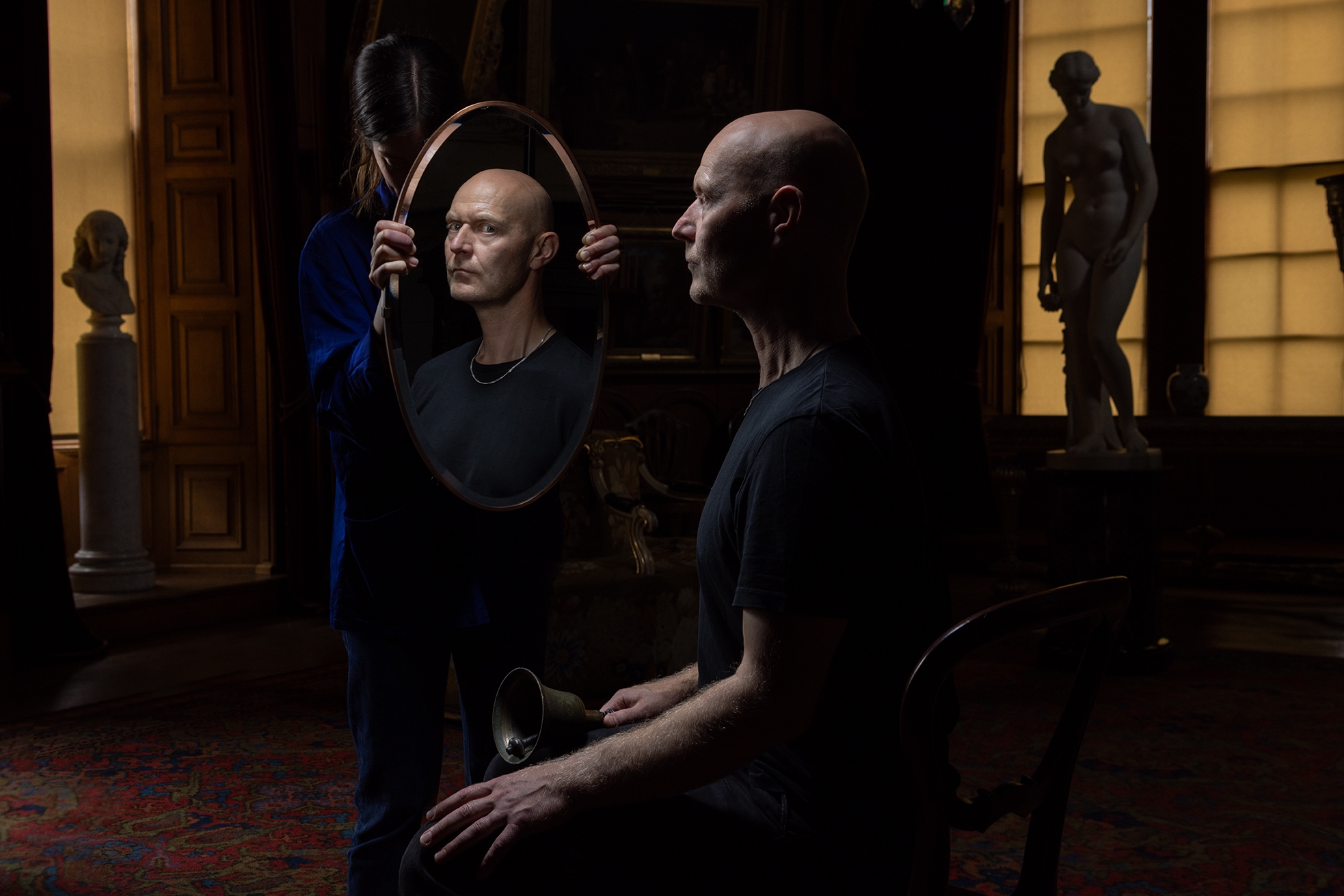
'Anticamera: un musical' [Antechamber: A Musical] by Siôn Parkinson. Ph. Donald Milne, 2026.
BEATRICE BONINO X ANY
Any Lamentation (The Lowest Level of the Human Mood)
Beatrice Bonino and musician Anastasia Patellis, known as Any, give sonic form to the emotions that seem to linger in the objects of the Collection: the desire that precedes an acquisition, the satisfaction of possession, and the unease that returns. Born out of a dialogue between the two artists, Any Lamentation (The Lowest Level of the Human Mood) is an electroacoustic composition for solo harp that explores the ambivalence of artworks, capable of offering both solace and torment.
The cyclical repetition of the Phrygian mode, combined with a granular effects pedal, transforms the harp’s natural resonance into cascades of micro-loops, glacial ambient textures and slowly accumulating drones. Desire thus takes on the rhythm of a lament that remains suspended, never quite reaching resolution.
JEREMY DELLER
Untitled
Jeremy Deller opens his Phonogram by admitting to a certain dislike of audio guides, before taking listeners on a journey from the Cerruti library to the Norfolk coast. A village discovered in the Blaeus’ seventeenth-century atlas becomes the starting point for a series of encounters and digressions: lands swallowed by the sea, a solar eclipse, amusement arcades and seaside theatres, sacred music and pop riffs.
Deller weaves together personal anecdotes, field recordings and musical interludes, eventually returning to Cerruti through the sound of machinery in an industrial bookbinding factory. The very sound that helped make the Collection possible becomes the material for a new composition.
GIORGIO DI DOMENICO
Desired Objects: Desire and Desires in the Cerruti Collection
Giorgio Di Domenico explores the Cerruti Collection through the lens of desire: the desire to possess, to be remembered, and romantic desire, whether expressed or suppressed. Moving between the writings of Calvino and Savinio, paintings by Bacon and Pontormo, a dedication by Proust and a photograph by Man Ray, his Phonogram intertwines the collector’s aspirations with the passions of the artists and figures who inhabit the works.
Even the dummy books on the shelves, copies of paintings and carefully staged interiors of the Villa become clues in this web of desires. Expressed, implicit or unspoken desires emerge along the way, turning the house-museum into a journey that also invites listeners to reflect on the fine line between possessing something and being possessed by it.
SIÔN PARKINSON
Antechamber: A Musical
With Antechamber: A Musical, Siôn Parkinson transforms the house-museum into a musical score, taking as his starting point the antechamber: literally, a room before a room. Traces of gestures, movements and voices left on artworks, books, furnishings and carpets become a form of musical notation through which to listen to the Villa.
Two voices, in English and Italian, intertwine with Robbie Donal’s Scottish smallpipes, the sounds of the house — clothing, furniture, books and billiard balls — and the sounds of contemporary “antechambers”, from hold music to virtual waiting rooms.
The antechamber thus becomes a state of suspension in which voices, bodies and objects wait to pass from one condition to another.