
Centre Table with Two Drawers
Giuseppe Viglione
End of 18th century
76 x 35,3 x 48 cm
Inv. 0290
Catalogue N. A264
Description
Provenance
In the Cerruti collection there are two tables, which are very similar in terms of their general structure, tapering legs and sabots (gilt-bronze feet), (Fig. 1). In both cases, the frontal space beneath the top is a faux drawer concealing a real one that opens on the right side. Small shelves can instead be pulled out on the front and the left. However, they differ not only in terms of measurements and marble but also of the diamond pattern, legs, facings and handles. Both are distinguished by solid and balanced elegance. Sobriety and functionality are the hallmarks of all the work of this cabinetmaker, known for a series of bonheur du jour writing desks that serve also as prayer stools and for “half-moon” (à demilune) commodes, in which he displays greater creativity while remaining far behind contemporary French cabinetmaking. Giuseppe Viglione (1748-1823) was born in Cissone delle Langhe, the hometown of the well-known cabinetmaker Luigi Prinotto, his uncle on his mother’s side. His name is not listed in the Registri dei Capi d’opera of the Università dei Minusieri ed Ebanisti in Turin, which record all those qualified to practice the profession with their own workshop. This may be due to the chaotic state of the documentation, as Viglione certainly took the examination for admission and indeed described himself as a “padrone ebanista” or master cabinetmaker on the paper label (Fig. 2) affixed to his pieces of furniture.
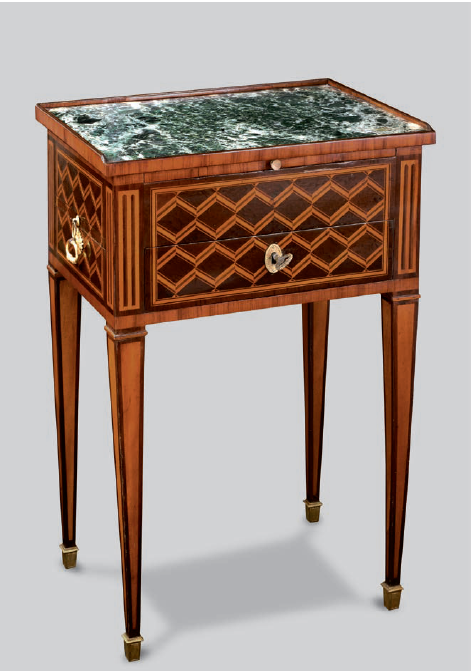
Fig. 1. Centre Table with Two Drawers (N. Cat. A263).
He had a certain number of these printed in 1781 and went on using them, altering the last figure of the year by hand. His workshop is listed in the Censimento delle arti of 1792 and proves to be the most important of its kind in Turin with six employees. Viglione also did some work for the ruling House of Savoy, but the cabinetmaker to the king at the time was the better-known and more gifted Giovanni Galletti. The payments begin in 1789, stop in 1797 with the fall of the monarchy, and resume in 1815 with the Restoration. His home and business were in Contrada dell’Ospedale, now Via Giolitti.
Roberto Antonetto
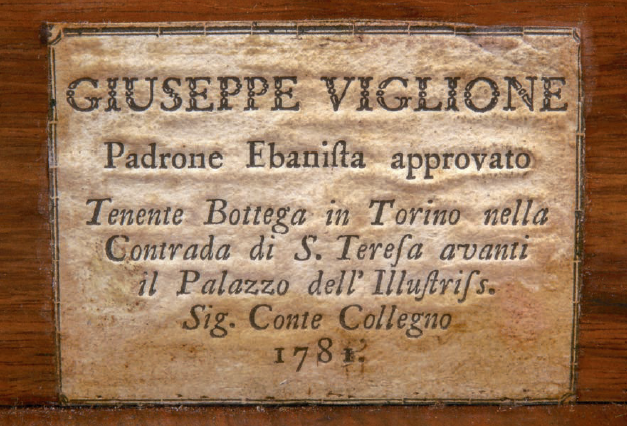
Fig. 2. Paper label glued inside the front drawer of table (N. Cat. A264).