
Liber chronicarum
Hartmann Schedel
Anton Koberger
Nurembreg
1493
in-folio (470 x 335 mm)
Inv. 0728
Catalogue N. A652
Description
Provenance
Bibliography
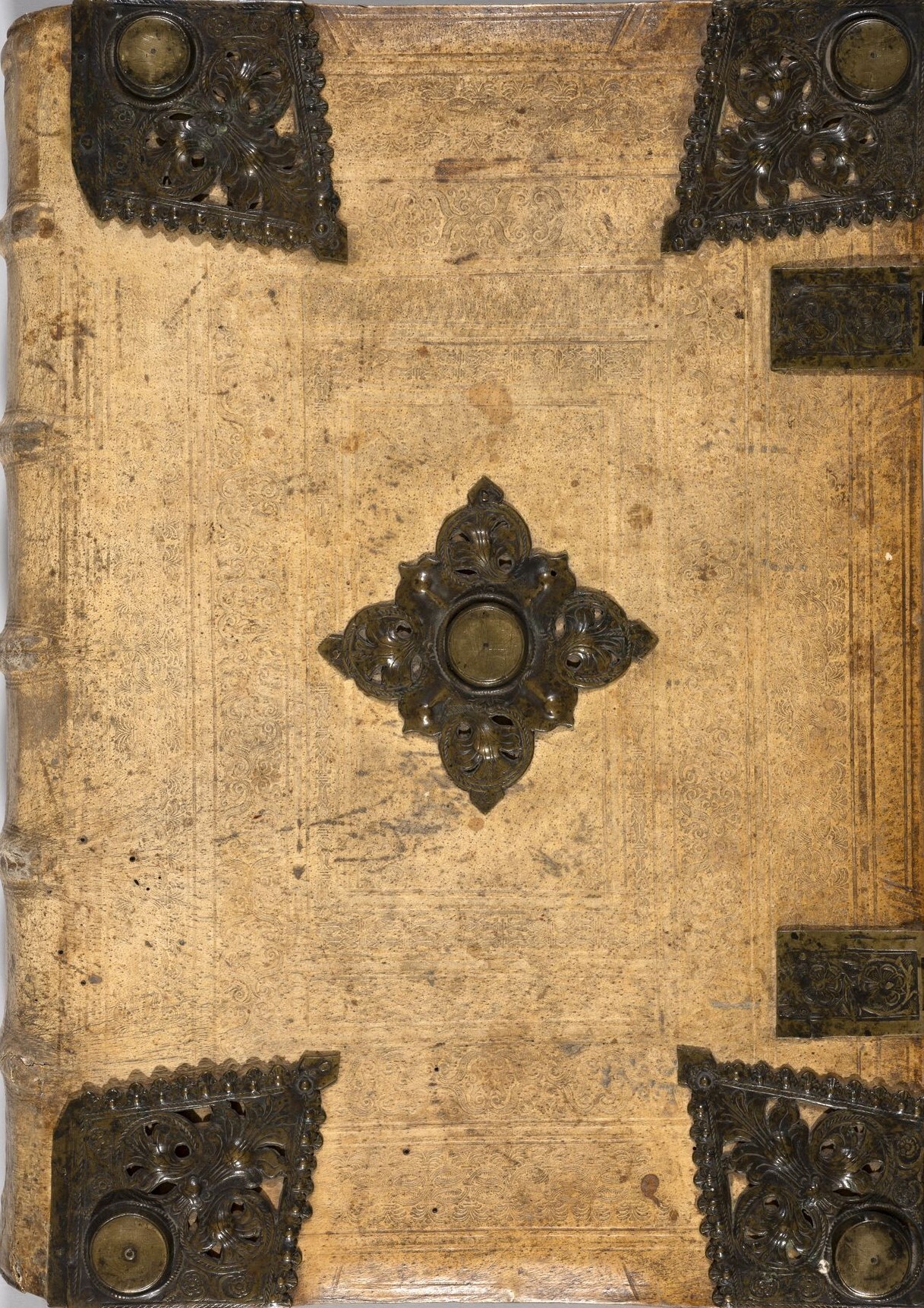
Hartmann Schedel, Liber chronicarum, Anton Koberger, Nuremberg 1493
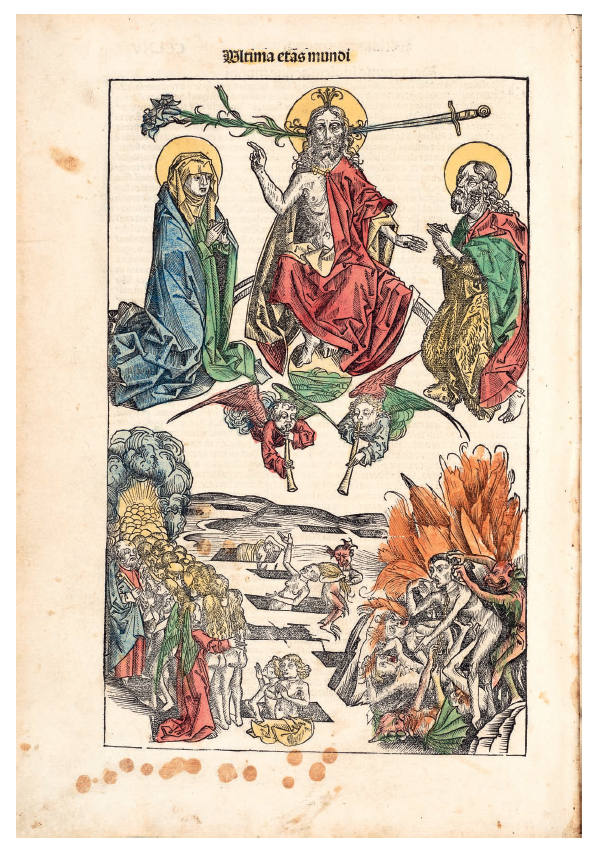
Hartmann Schedel (1440-1514), a physician and humanist, devoted himself to encyclopaedic studies that led him to gather a vast library.1 His most famous work, written on the basis of a variety of sources, was the Liber chronicarum, known as Schedel’sche Weltchronik or the Nuremberg Chronicle, which is a richly illustrated universal history that, in keeping with the medieval tradition of the subdivision into different world ages, proceeds from the Creation to the author’s own times, incorporating an atlas with geographical maps and views of cities. The work, published in a large format in Nuremberg in 1493, had a Latin edition and a German one, both printed by Anton Koberger (1440/1445-1515),2 who used more than 1,800 woodcuts, which were subsequently coloured by hand. The engravings were executed by the painter Michael Wolgemut (1434-1519),3 known for being the master with whom the young Albrecht Dürer trained, in collaboration with his stepson Wilhelm Pleydenwurff (c. 1458-94). In addition to the coloured woodcuts, the decoration should also have included illuminated initials for the principal sections of the text, which were to be inside the panels left blank during the printing process. However, they were never completed in the volume in question. The work of Schedel, one of the highest points of 15th-century book illustration, is probably the illustrated incunabulum of which the most copies have been preserved, which soon circulated throughout the most important European libraries.
Fabrizio Crivello
1 Wagner 2014.
2 Nuremberg 2013.
3 H. Randall, “Michael Wolgemut und die Schedel’sche Weltchronik”, in Nuremberg 2019-20, pp. 123-131.