Le avventure di Pinocchio
Carlo Collodi
Felice Paggi
Florence
1883
8vo (185 x 125 x 25 mm)
Inv. 0559
Catalogue N. A495
Description
Provenance
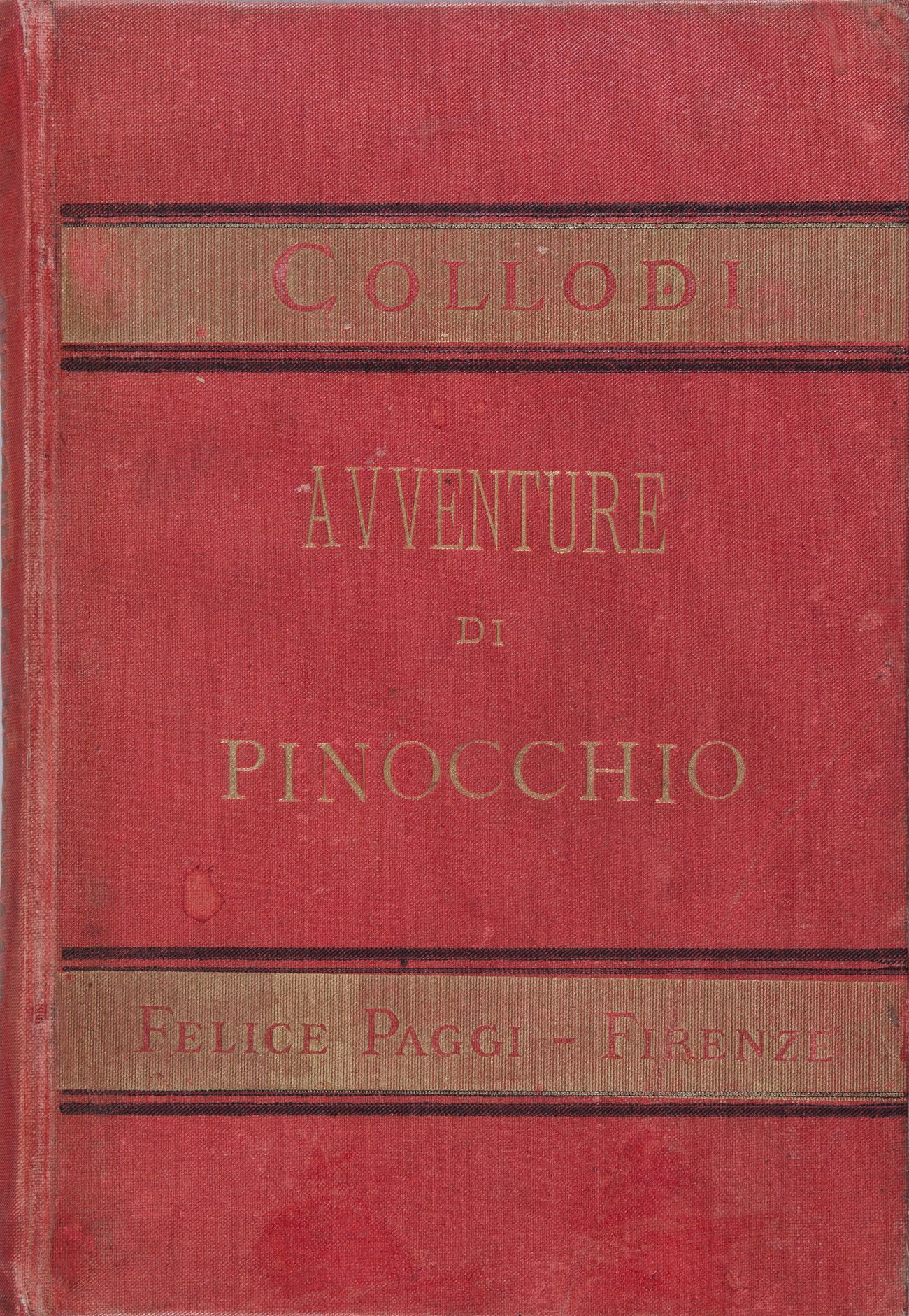
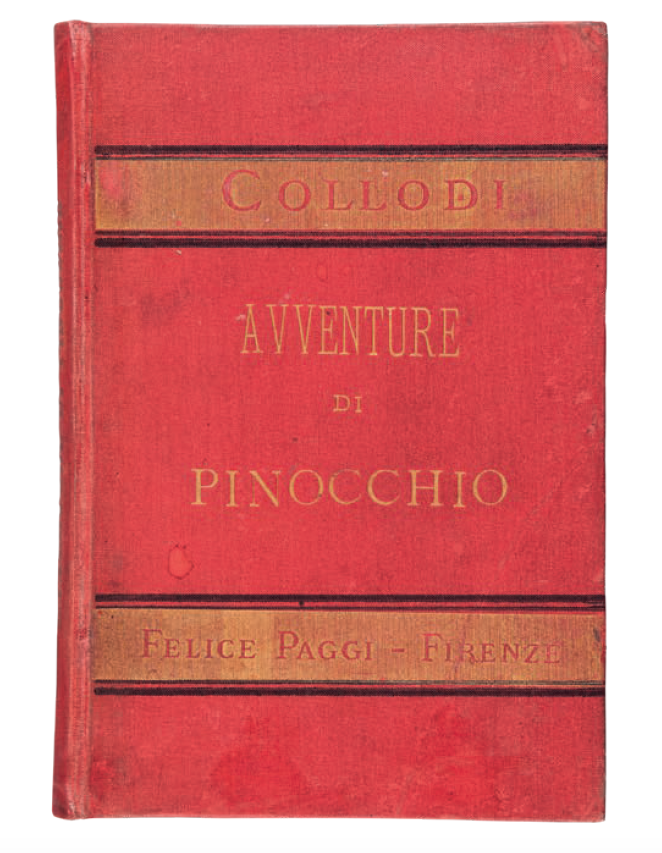
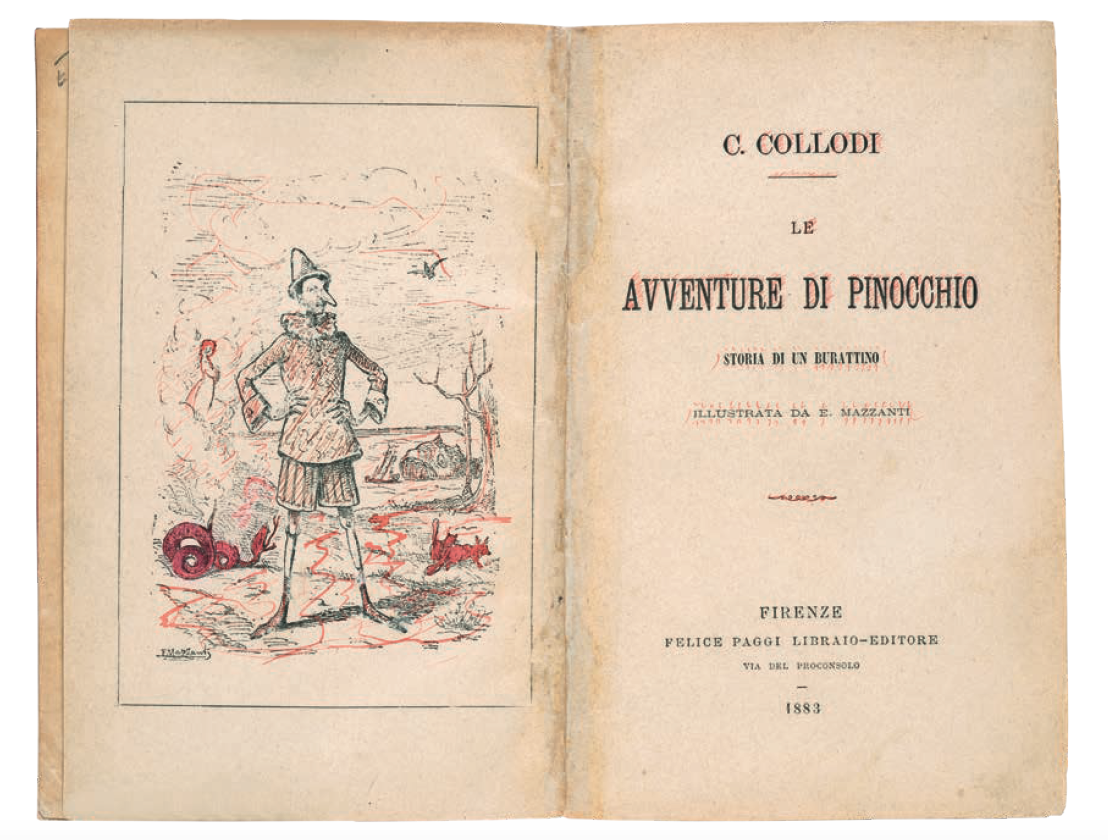
Carlo Collodi (Carlo Lorenzini), Le avventure di Pinocchio - Storia di un burattino, Felice Paggi, Florence 1883
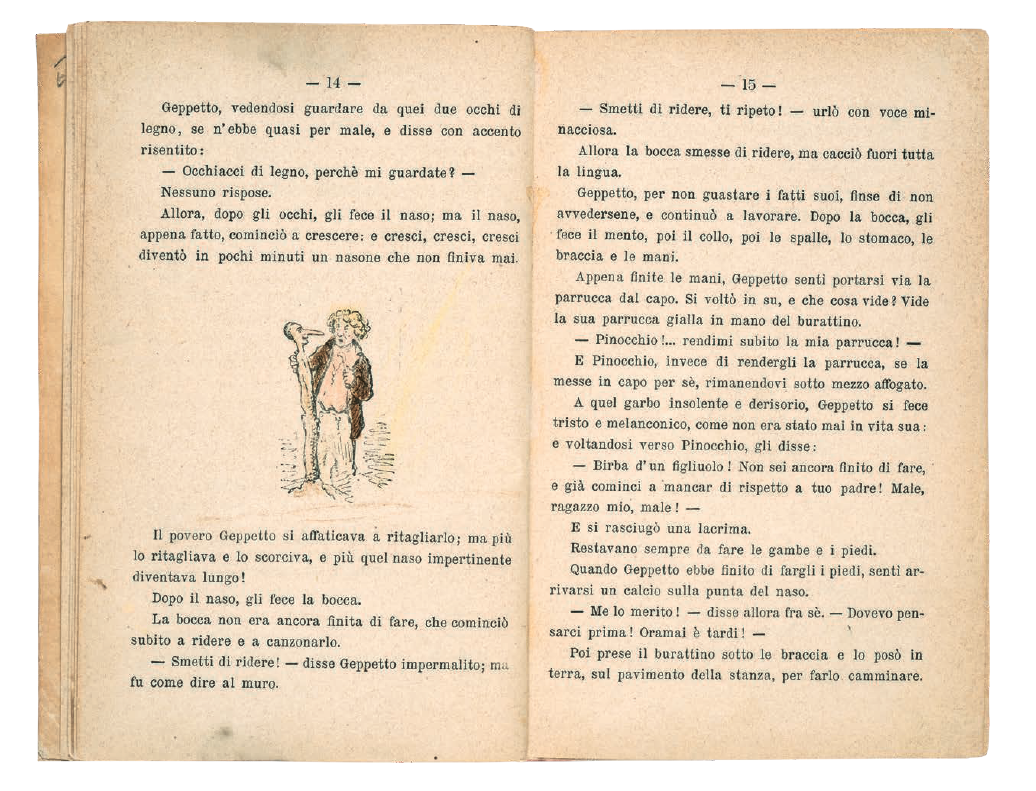
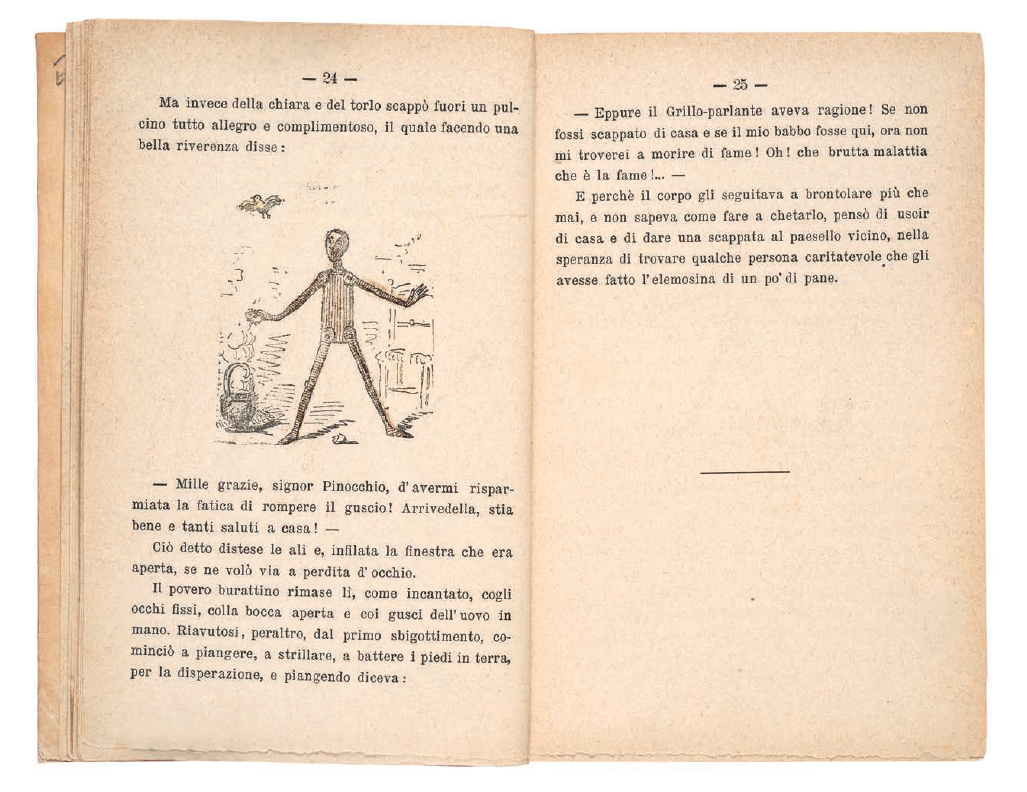
This is the first edition in book form of the most famous children’s story. It was originally published under the title “La storia di un burattino” in thirty instalments in twenty-six issues of the magazine Il Giornale dei Bambini, between 7 July 1881 and 25 January 1883. In the preface Carlo Collodi (1826-90) himself described the text as “childish”, something he had published for the simple purpose of making money to pay off some gambling debts. In 1883, the publisher Felice Paggi printed the first edition as a bound volume, having clearly sensed the commercial potential of the work. Paggi had the text illustrated by Enrico Mazzanti, who produced sixty-two cartoons that were then turned into wood engravings for printing. Mazzanti’s illustrations played a decisive role in establishing the iconography of the story, allowing the puppet to emerge in its most appropriate depiction and creating the figurative world that would accompany this wonderful story. The story unfolds through thirty-six chapters, starting with the initial “How it happened that Mastro Ciliegia, carpenter, found a piece of wood that wept and laughed like a child”, telling a captivating series of stories which are sometimes moving and sometimes “mischievous”, all the way through the epilogue, “Pinocchio finally ceases to be a Marionette and becomes a boy”.
This edition has become especially rare, far more than the issues of the magazine where it was first published. This is because it was a somewhat fragile volume in typographical terms, intended for children. Not only are the surviving copies extremely scarce, they are also very difficult to find in good condition. The international renown of the work can be attributed to the first English language edition published in 1892. Since then, it has been translated into 240 different languages.
Roberto Cena