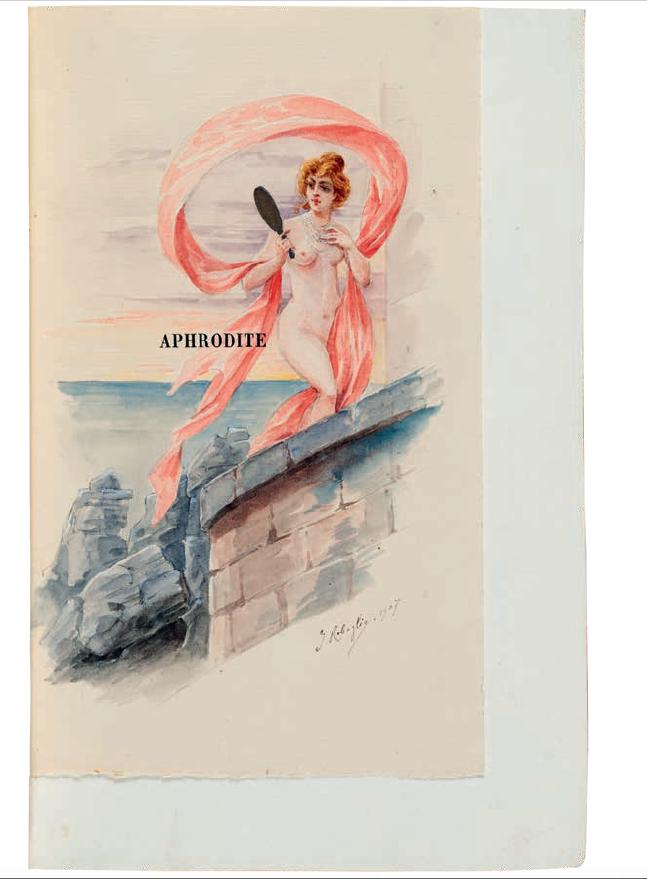
Aphrodite Moeurs antiques
Pierre Louÿs
Blais et Roy per Mercure de France
Poitiers
1896
8vo (264 x 180 x 40 mm)
Inv. 0574
Catalogue N. A510
Description
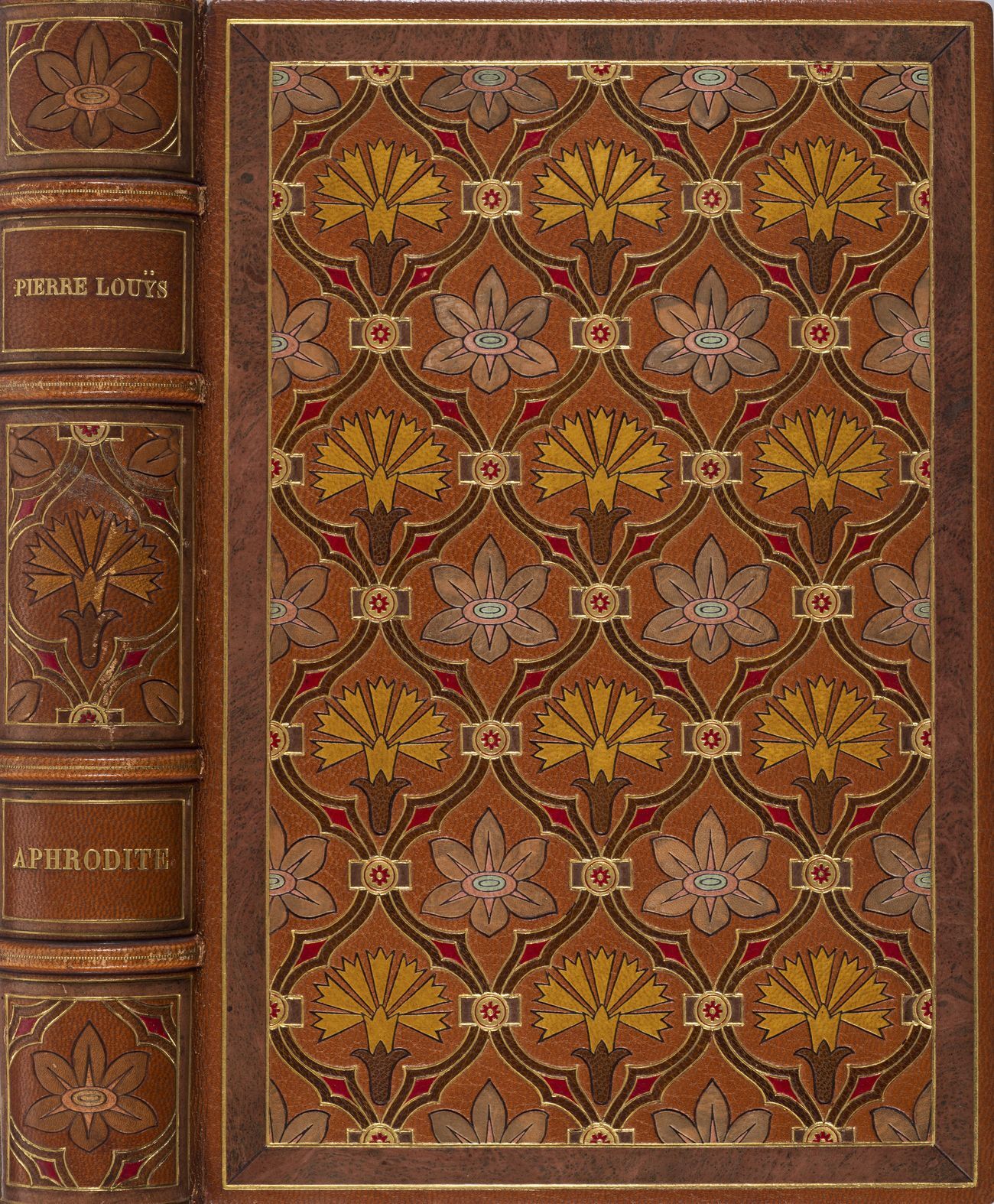
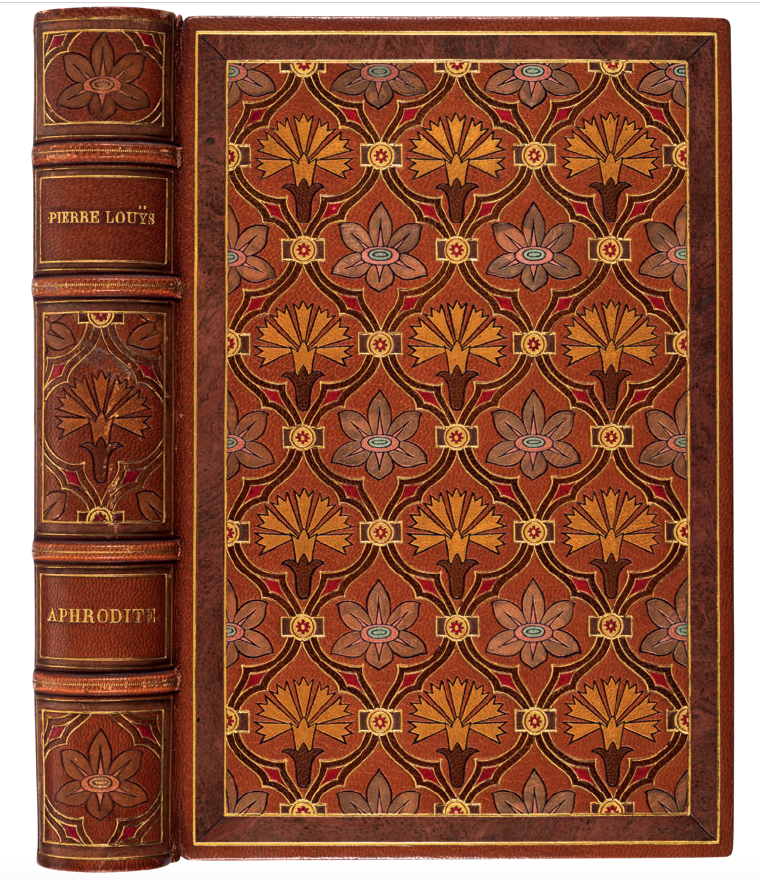
Pierre Louÿs, Aphrodite Moeurs antiques, Blais et Roy per Mercure de France, Poitiers 1896
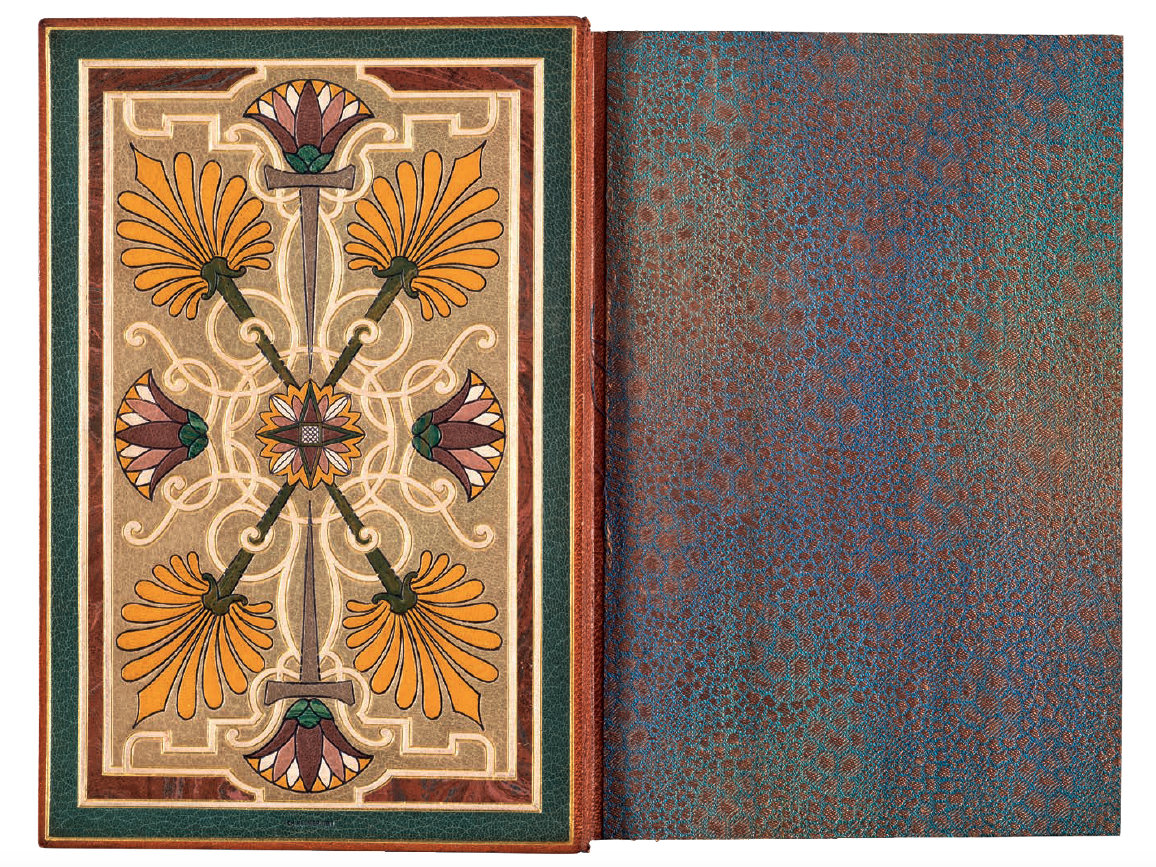
This Art Nouveau binding was made by Charles Meunier in 1911. Meunier was born in Paris in 1866. He was apprenticed at the age of eleven to Gustave Bénard and five years later joined the atelier of Marius-Michel. On reaching the age of twenty he set up on his own in Rue Mazarine and then moved to 75 Boulevard Malesherbes. Initially influenced by Marius-Michel, using floral ornament and mosaic designs, he extended the ornamental designs of his former master and tutor and became the creator of emblematic designs, using onlays and gold tooling, as well as incised leather, showing symbolic and pictorial themes that reflected the text inside. He worked fast and some of his bindings are gaudy and crudely executed; his work received mixed reactions from his contemporaries and the collectors of his time, many of whom disapproved of Meunier’s tendency to mix styles. He decorated the spines, especially those on his half bindings, with emblematic designs and the titles on banderoles. In the late 1890s he deployed enamelled and sculpted bronze and ivory plaques. His symbolism has been described as grotesque. He declined to participate in the exposition of 1900, judging it a foregone conclusion that the first prize would go to Marius-Michel and not wanting to become second; instead he staged his own show and launched a quarterly review, L’Oeuvre et l’image, devoted to all aspects of book production, watercolour, engraving and woodcut, as well as paper and bookbinding. It ceased publication in 1903, but Meunier continued to publish himself on bookbinding. His output was prodigious, having produced by 1897 about 600 emblematic bindings, as well as those with floral and mosaic designs. In 1908 he sold part of his library. He gave lectures on French ancient and modern bindings in New York as well as in Paris and Amiens. In a lecture in 1909 he glorified floral ornament: “The flower has been the pivot of modern imagination and French binding owes the origin of its transformation to it […] Stylised flowers figure in numerous designs, imposed on the principle of mosaic décor… There is as great a diversity in the character of flowers as in the human spirit” [my rather free translation, MF]. He retired in 1920 and died, all but forgotten, in 1940.1
Mirjam Foot
1 Devauchelle 1959-61, vol. III, pp. 96-104, 126-127; Duncan, De Bartha 1989.